SeattleRoadside Assistance (206) 483-2704

Winch Out Service in Seattle, WA

A wheel dropped off a soft shoulder, a wet grass verge swallowed the tires, or a muddy pull-off turned to soup after a week of rain. A roadside operator pulls the car back to firm ground with a winch. You hear the quote first.

Roadside Assistance Emergency Line(206) 483-2704

Call DispatchOr fill in a breakdown ticket

What moves the quote

Have this ready when you call

  1. Where the car is: road, nearest cross street or landmark, and which side of the road
  2. What the ground is: grass, mud, gravel or snow, and whether the car is tilted, on a slope or has a wheel off an edge
  3. Make, model and year, drive type, and whether the wheels are turned
(206) 483-2704

How much does a winch out service cost in Seattle?

A winch out in Seattle is quoted on the call, because the price depends on how deep the car sits, how far to firm ground and how easy the spot is to reach. Call (206) 483-2704, describe the ground and the car, and you hear one number first.

A car with one wheel off a gravel edge is a short pull. A car sunk to the frame in wet clay is slow work. The quote moves with how soft the ground is, how far the car must travel to reach firm footing, the angle of the pull, whether there is a solid anchor point for the truck and whether the truck can park on stable ground within reach. The operator also wants to know if the car is front-, rear- or all-wheel drive and whether the wheels are turned. A late-night call on a dark road changes the number too. If the job is not safe to attempt, you hear that before any cable comes out.
What is a winch out and when do I need one in Seattle?

A winch out uses a cable and a powered drum on a recovery truck to pull a stuck vehicle back onto firm ground. You need one when the wheels spin without moving the car and rocking back and forth only digs you deeper.

This is different from a tow. A tow lifts a car that cannot drive, while a winch out pulls a car that is stuck but otherwise fine. In Seattle it comes up on wet grass verges, in drainage ditches, on muddy pull-offs and in gravel lots. The operator looks at the ground, picks an anchor point on your car that is built to take a pull and pulls in a straight line so the cable does not damage the body. If the car is high-centered or wedged against a rock, the approach changes. Once it is out, the car is checked for leaking fluid or bent parts before you drive on. No weight limit is promised, so describe the car and the spot accurately on the call.

Can you pull a car off a wet grass verge or out of a ditch in Seattle?

Yes. After a stretch of rain, a grass verge can look solid and give way under one tire. Stop spinning the wheels as soon as you feel the car sink, because spinning digs the tires deeper.

Seattle gets long, steady rain, and the soil beside a road soaks it up and turns to slick mud. A wheel that drifts onto the verge while you pull over or turn around can sink fast, and the car can end up leaning toward a ditch. Let off the gas, put the car in park and shut it off. Look at where each tire sits and how far firm ground is. Do not pile branches under the wheels on a slope, since a car that suddenly frees itself can move fast. The operator needs to know how the car sits, how close it is to the drop and whether there is a safe place for a truck to stop on firm road. Some spots are too tight to work safely, and you hear that on the call.

Can a car that slid off a steep Seattle street be winched out?

Often yes, but a steep street changes how the pull is set up. Tell the operator the cross streets, which way the car faces and whether it rests against a curb, a wall or a ditch.

A car that slides on a wet or icy hill can end up with a wheel over the curb, nose into a planting strip or tilted into a bank. Queen Anne, Capitol Hill, West Seattle and the streets above the lake all have grades where this happens. The danger is a second slide, so the operator checks that the truck has firm footing and a safe line before the cable goes on. Keep everyone uphill and away from the cable path. Do not try to drive the car out, since a spinning tire on a slope can push the car sideways. Some slopes are too steep for a safe pull, and then the next step is a tow, which is quoted on the same call. Set the parking brake and leave the wheels turned toward the curb.

Can you recover a car stuck in a gravel lot or muddy pull-off near the Ship Canal?

Yes. Gravel lots and muddy pull-offs near the Ship Canal and the lake shores can trap low cars and trucks alike. Give the lot name or the nearest road, and the gate if there is one.

Unpaved lots, boat launches and informal turnouts around Ballard, Fremont and the lake shores can be loose gravel, soft sand or ground that turns to mud when wet. A car with low clearance can bottom out, and a heavy truck can settle in. Some of these spots are gated or closed after dark, so tell the operator whether a gate is shut and who holds the key. Do not drive down a boat ramp to get a car out, since the surface can be slick with algae. Posted signs and the rules of the owner or the city decide what vehicles may do on the site. The operator looks for the straightest and safest line out and may pull the car along a path that avoids soft spots. Afterward, check the tires for cuts.

What if I get stuck in snow or ice in Seattle?

Stop pushing the gas, because spinning on ice or packed snow polishes the surface and digs a pit. Seattle sees snow only now and then, and most cars and drivers are not set up for it.

When snow or ice does arrive, steep side streets stop traffic. A car can slide into a parked car, a curb or a driveway apron and stay wedged there. Clear snow from around the tires if you can do it safely, and never stand behind a car that is rocking. A winch out can pull a car back to a flat spot, but a closed hill or a road full of stuck cars may keep a truck from reaching you. Tell the operator the street and what blocks the way in. If the weather has stopped traffic, the operator tells you plainly on the phone what is possible. Keep the engine off unless the tailpipe is clear of snow, and keep a coat and phone charger with you.

What should I do before a winch out in Seattle?

Stop spinning the wheels, shut the engine off and get everyone out on the side away from traffic. Take a few photos of how the car sits, and keep your hands off the cable until the operator says it is safe.

Spinning the tires digs the car deeper and can overheat the transmission, so stop as soon as the car sinks. Turn the wheels straight if the car allows it, and set the parking brake. Tell the operator whether the car has a factory tow hook or a recovery point, and whether the bumper cover is loose or cracked, since a cable on a weak part tears it off. Keep children and pets away from the cable path. A winch cable under load can snap, so people stand well clear during the pull. If the car sits near traffic, turn on the hazard lights, call 911 if it is in a lane and remember Washington's Move Over law, RCW 46.61.212, which asks drivers to move over or slow down for roadside vehicles with warning lights. After the pull, check the tires and ask about a flat tire change if one was damaged.

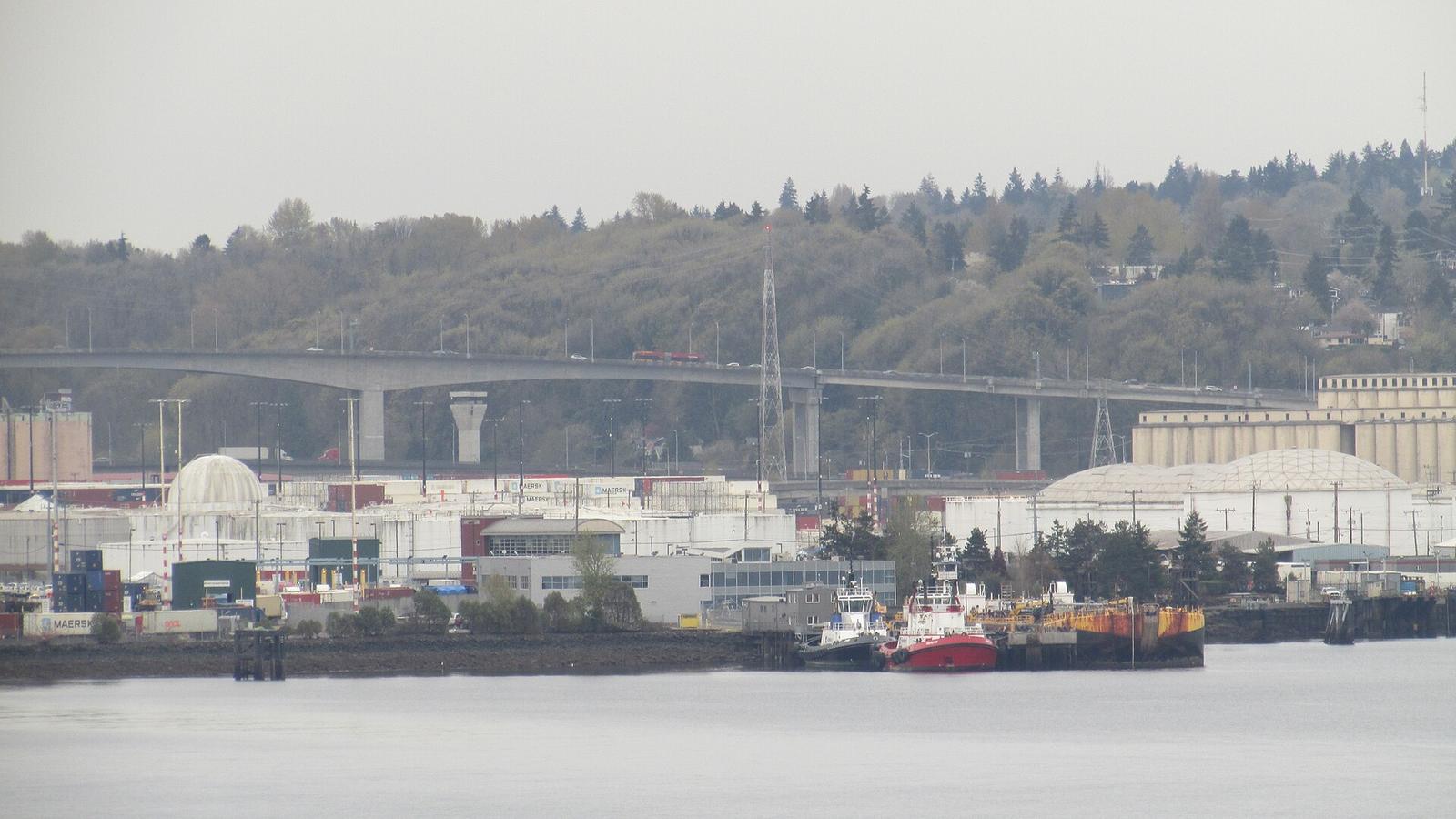
The West Seattle Bridge over the Duwamish Waterway
The West Seattle Bridge over the Duwamish.

Write it down before you dial

Fill in the ticket and tap send. It goes to the local operator's phone as a text, and they call you back on the number you give. In a hurry? Call (206) 483-2704 instead.

On a freeway, tap the road and your direction, then add the nearest exit or cross street. That is enough for the operator to find you.

Roadside Assistance Emergency Line(206) 483-2704

Breakdown ticketSeattle, WA

On a freeway? Tap the road, then the direction

Seattle and the towns around it

Calls come from every part of Seattle and from Shoreline, Burien, Tukwila, SeaTac, Renton, Mercer Island and Bellevue. Travel to the far edges of the county is part of the quote you hear on the call.

  • SeattleKing County · home base
  • ShorelineKing County · north on I-5 and Aurora Avenue
  • BurienKing County · south on SR-509
  • TukwilaKing County · south where I-5 meets I-405
  • SeaTacKing County · south by the airport
  • RentonKing County · southeast on I-405
  • Mercer IslandKing County · across the I-90 floating bridge
  • BellevueKing County · east across SR-520 and I-90

Town-by-town coverage, with a map for each

Call (206) 483-2704Call