SeattleRoadside Assistance (206) 483-2704

Emergency Roadside Assistance in Seattle, WA

A car that dies on the I-90 or SR-520 bridge, in the SR-99 tunnel or on the I-5 Ship Canal Bridge leaves you with little room and fast traffic. This guide covers what to do first, when to call 911, what WSDOT's teams do and where emergency roadside assistance in Seattle fits in.

Roadside Assistance Emergency Line(206) 483-2704

Call DispatchOr fill in a breakdown ticket

Have this ready when you call

  1. The road or bridge, your direction and the nearest exit, cross street or landmark
  2. Where the car sits: shoulder, travel lane or inside the tunnel, and whether anyone is hurt
  3. The make, model and year, what the car is doing and a callback number
(206) 483-2704

What do I do first if my car breaks down on a Seattle bridge?

Turn on your hazard lights, steer to the right shoulder while the car still rolls, and stop as far from the lanes as you can. Keep your seat belt on. Call for help once the car has stopped.

Losing engine power also takes away power steering and brake assist, so for the first few seconds the wheel feels heavy and the pedal feels stiff. Grip the wheel firmly and brake steadily. WSDOT's advice for a disabled vehicle is to drive to the right shoulder if you can. Its work zone guidance adds that if you are stuck in a traffic lane, you should stay in the vehicle, turn on the hazard lights and dial 911. If you reach the shoulder and it is safe, WSDOT says you can get out and raise the hood while you wait. The same page warns that getting out is riskier on freeways, where traffic is fast, so most drivers on a bridge are better off staying belted in. Whenever you cannot tell whether the car clears the lane, treat it as stopped in the lane.
Should I call 911 or emergency roadside assistance in Seattle when my car dies on a bridge?

Call 911 first if any part of the car is in a travel lane, anyone is hurt, or you see smoke or fire. If the car is clear of the lanes and everyone is fine, call the roadside line next.

WSDOT says to dial 911 for help on the roadway, such as a flat tire, running out of gas or a disabled vehicle, and that 911 sends the right responder, including a WSDOT Incident Response Team. Give the dispatcher the road, your direction of travel and the nearest exit, cross street or landmark. On a bridge, say which bridge you are on and which way you were heading. Mention where the car sits: on the shoulder, in a lane or against the left barrier. Stay on the line if the dispatcher asks you to. Once the scene is handled, or if the car is safely clear and nobody is hurt, call emergency roadside assistance in Seattle at (206) 483-2704. The operator quotes the job before a truck leaves, so you decide with the facts in hand.

Do the I-90 and SR-520 floating bridges in Seattle have shoulders?

The SR-520 floating bridge has shoulders for disabled vehicles, and WSDOT lists shoulder closures on both I-90 floating bridges during its maintenance work. Check the alert before you count on one.

WSDOT built the current SR-520 bridge, the world's longest floating bridge, with shoulders so a disabled vehicle can pull over and not block traffic. The old highway had none. The new bridge carries two general-purpose lanes and a transit or HOV lane in each direction. The I-90 crossing is two bridges. The Lacey V. Murrow carries four eastbound lanes, and the Homer M. Hadley carries four westbound lanes along with Sound Transit's 2 Line light rail. WSDOT has announced about 18 months of electrical and pontoon-monitoring work on both bridges, starting in late October 2026, with occasional left-lane and shoulder closures. WSDOT designed the SR-520 bridge to withstand a 100-year storm, but conditions still change fast on open water, so check WSDOT's travel alerts before you cross in bad weather. If you cannot find a shoulder, treat the car as stopped in a lane.

What should I do if my car breaks down in the SR-99 tunnel in Seattle?

Turn on your hazard lights, pull onto the shoulder if you can, stay in the car and call 911. Do not walk in the tunnel unless responders tell you to evacuate.

The tunnel is about two miles long, and WSDOT says it has no mid-tunnel entrances or exits, so there is no off-ramp partway through. SDOT describes an eight-foot shoulder for cars to pull over after a breakdown, and emergency exits every 650 feet that provide shelter and escape routes. WSDOT's environmental impact statement says the tunnel is not a pedestrian facility, so people are not allowed to leave their vehicles or walk through it except in an emergency, when directed to evacuate. The same document says leaving the tunnel on foot means using stairs. It also describes video cameras feeding WSDOT's 24-hour tunnel control center. Tell the 911 dispatcher which direction you were heading and which end of the tunnel you were nearest, then follow what responders say when they arrive. Call the roadside line after the scene is under control, to arrange a tow or tire help once the car is moved.

What if my car stops on the I-5 Ship Canal Bridge or in the express lanes?

Call 911 if any part of the car is in a lane, and stay belted in with the hazard lights on. WSDOT says that with northbound I-5 cut to two lanes there, even one disabled vehicle can disrupt traffic badly.

The Ship Canal Bridge carries I-5 over the Lake Washington Ship Canal. WSDOT's Revive I-5 project is repairing it, and the project page says northbound I-5 is reduced to two lanes across the bridge through the end of 2026. Southbound lanes are due to be cut for months in 2027, with construction projected to finish by the end of 2027. WSDOT's news release says that even a single collision or disabled vehicle can significantly disrupt traffic in that work zone. The reversible express lanes are running northbound only, 24 hours a day, through the end of 2026, so do not assume they flow south in the morning. WSDOT says that arrangement also gives emergency crews more flexibility to respond to incidents. If your car quits in a work zone, WSDOT's guidance is to stay in the vehicle with the hazards on and dial 911 if you are in a traffic lane. Give the dispatcher your direction and the last exit you passed.

What if I break down on the West Seattle Bridge or the Aurora Bridge?

On either bridge, keep the hazard lights on, stay belted in and call 911 if the car is blocking a lane. Do not step out unless you are sure the car is clear of traffic.

The West Seattle Bridge belongs to the Seattle Department of Transportation. It reopened in September 2022 after a closure of about two and a half years, and SDOT watches it with cameras, sensors and frequent inspections. SDOT also widened the left shoulder on the westbound side so inspectors can get into the structure without closing a lane. That width was added for inspections, so do not assume it is a place to stop. The Aurora Bridge, officially the George Washington Memorial Bridge, carries SR-99 over the ship canal between Fremont and Queen Anne. On either span, WSDOT's advice for a car that still rolls is to reach the right shoulder if you can. Give the dispatcher the bridge name, your direction of travel and the end you were nearest, so responders look at the right deck.

What does WSDOT's Incident Response Team do for stalled cars around Seattle?

WSDOT's Incident Response Team helps drivers on state highways with problems such as flat tires and empty fuel tanks, and you reach it through 911. The teams are on call around the clock.

WSDOT describes the program as a way to cut congestion by responding to, investigating and clearing traffic incidents, from helping a driver with a flat tire to major crashes. Teams also patrol major corridors during peak traffic hours. Statewide they cover about 1,300 centerline miles, roughly 18 percent of state-owned highway miles. That is a small share of the road network, so a team may not be near you. The program responds on state highways, so a call from a city street goes through 911 as well and the dispatcher decides who goes. WSDOT's pages do not say whether the team tows a car or what the service costs, so ask the dispatcher what is available at your spot. A roadside call covers the work you choose and pay for, such as a tire repair or a tow to the shop you pick.

Does Washington's move over law protect a tow truck working on a Seattle bridge approach?

Yes, when the truck is stopped with its visual lights on. RCW 46.61.212 also covers roadside assistance vehicles with 360 degree warning lights, and the protected zone is the adjacent lanes 200 feet before and after the vehicle.

How a driver must respond depends on the road. Where there are four or more lanes with at least two going your way, approaching drivers must slow down and, if it is safe, change lanes or move away from the lane or shoulder where the vehicle sits. On a road with fewer lanes, they slow down and pass to the left at a safe distance if they can. If moving over is unsafe, the driver must slow to at least 10 miles per hour below the posted limit, or to no more than 50 where the limit is over 60. Nobody may exceed the posted limit. The fine is doubled and cannot be waived, reduced or suspended, and endangering workers is a gross misdemeanor that brings a 60-day suspension of driving privileges. Police cars with lights and highway maintenance vehicles with flashing lights are covered too. A passing car can still come close on a narrow shoulder, so stay inside or on the side of the car away from the lanes until the truck driver says it is clear.

Is 24 hour roadside assistance in Seattle available on bridges and in the tunnel?

The line at (206) 483-2704 is answered 24 hours a day, and the operator tells you on the call whether a truck can work at your spot. Every job is quoted before a truck leaves.

A bridge shoulder, a tunnel and a travel lane are very different places to work, and 911 responders may control the scene first. Say where the car sits and what is wrong, then listen to what the operator can do there. The quote depends on the job, the spot and the hour: a tire plug on a wide shoulder is a different job from a tow off a span at 3 a.m. You hear one answer, and nothing is sent until you agree. If the operator cannot reach your spot, you hear that right away and can wait for 911 responders instead. Text a photo or a map pin to (206) 483-2704 only while you are parked safely, and never step out to take one. Keep your phone charged and have a callback number ready in case the call drops.

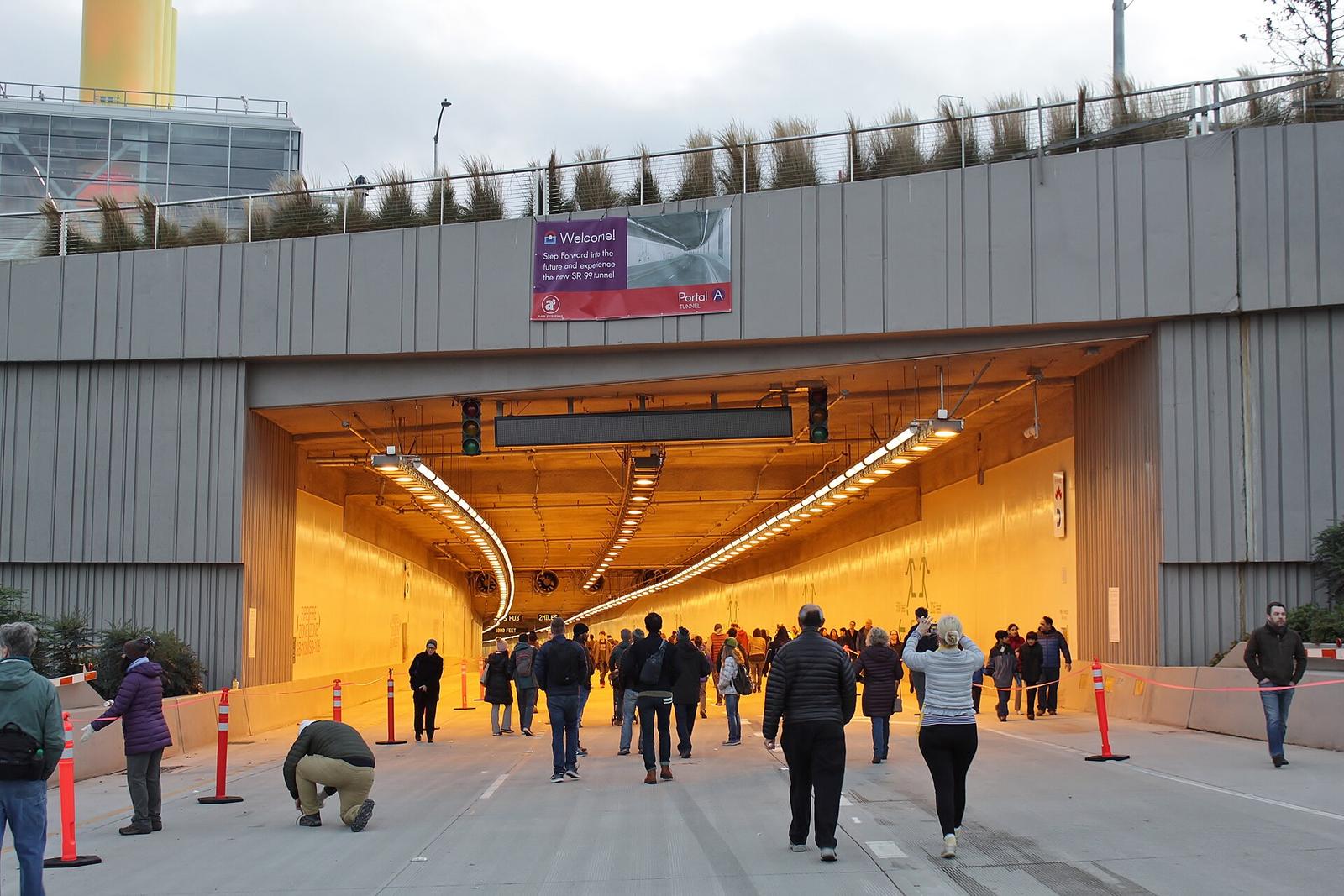
The north portal of the SR-99 tunnel, southbound lanes, on opening day
The SR-99 tunnel north portal on opening day, before cars.

Write it down before you dial

Fill in the ticket and tap send. It goes to the local operator's phone as a text, and they call you back on the number you give. In a hurry? Call (206) 483-2704 instead.

On a freeway, tap the road and your direction, then add the nearest exit or cross street. That is enough for the operator to find you.

Roadside Assistance Emergency Line(206) 483-2704

Breakdown ticketSeattle, WA

On a freeway? Tap the road, then the direction

Seattle and the towns around it

Calls come from every part of Seattle and from Shoreline, Burien, Tukwila, SeaTac, Renton, Mercer Island and Bellevue. Travel to the far edges of the county is part of the quote you hear on the call.

  • SeattleKing County · home base
  • ShorelineKing County · north on I-5 and Aurora Avenue
  • BurienKing County · south on SR-509
  • TukwilaKing County · south where I-5 meets I-405
  • SeaTacKing County · south by the airport
  • RentonKing County · southeast on I-405
  • Mercer IslandKing County · across the I-90 floating bridge
  • BellevueKing County · east across SR-520 and I-90

Town-by-town coverage, with a map for each

Call (206) 483-2704Call